
Sparkling Wine Styles
Sparkling wine is synonymous with celebration, but its diversity makes it suitable for Tuesday night dinner, not just New Year's Eve.
How Bubbles are Made
The bubbles come from carbon dioxide, a natural byproduct of fermentation. Winemakers trap this gas in the wine using different methods:
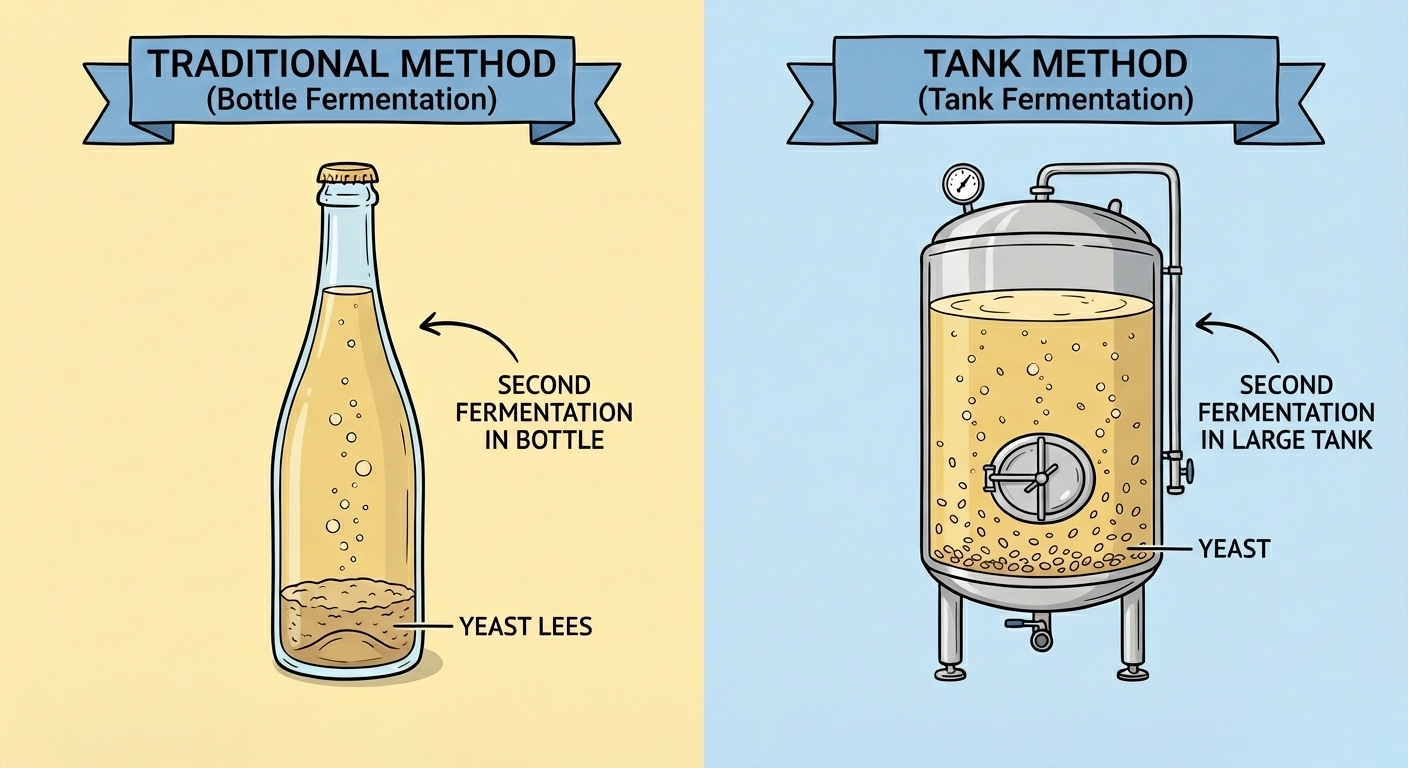
Traditional Method (Méthode Champenoise)
Used for Champagne and Cava. A secondary fermentation happens inside the individual bottle. The wine ages on the dead yeast cells (lees), creating complex flavors of toast, brioche, and almond. The bubbles are fine and persistent.
Tank Method (Charmat)
Used for Prosecco. Secondary fermentation happens in a large steel tank. This preserves the fresh fruit flavors of the grape and is much cheaper to produce. The bubbles are larger and frothier.
Sweetness Levels
Sparkling wine labels can be confusing. Here is the code:
- Brut Nature / Zero Dosage: Bone dry. No added sugar.
- Extra Brut: Very dry.
- Brut: Dry. The standard style for Champagne.
- Extra Dry: Slightly sweet (confusingly!). Typical for Prosecco.
- Demi-Sec: Noticeably sweet. Good for dessert.
Common Types
- Champagne (France): The gold standard. Pinot Noir, Chardonnay, Pinot Meunier. Complex, yeasty, acidic.
- Cava (Spain): Made like Champagne but with Spanish grapes. Incredible value for money. Earthy and rubbery notes.
- Prosecco (Italy): Glera grape. Fruity, floral, easy-drinking.
- Pét-Nat (Various): "Ancestral Method." Bottled before the first fermentation is finished. Rustic, cloudy, unpredictable, and fun.
Serving Tips
Safety First: Keep your thumb on the cork once the wire cage is loosened. Twist the bottle, not the cork, to release it with a gentle "sigh," not a loud "pop."
Glassware: While flutes are festive, they trap aromas. Try drinking Champagne from a regular white wine glass to fully appreciate the nose.
Pop a bottle.
Celebrate the small wins. Try a Cava next to a Prosecco and taste the difference in production methods.