Natural & Orange Wine
Walk into a hip wine bar today and you'll see cloudy bottles, funky labels, and wines the color of sunset. Welcome to the world of low-intervention wine.
What is Natural Wine?
"Natural wine" isn't a legally regulated term, but it generally refers to a philosophy: Nothing added, nothing taken away.
- Farming: Organic or Biodynamic. No pesticides or herbicides.
- Yeast: Native (wild) yeast only. No lab-cultured yeast.
- Additives: No sugar, acid, or enzymes added.
- Sulfites: Minimal to none. (Conventional wine uses sulfur dioxide as a preservative).
- Filtration: Often unfiltered, leaving the wine cloudy with sediment.
Orange Wine (Skin-Contact)
First things first: It is not made from oranges.
Orange wine is simply white wine made like red wine.
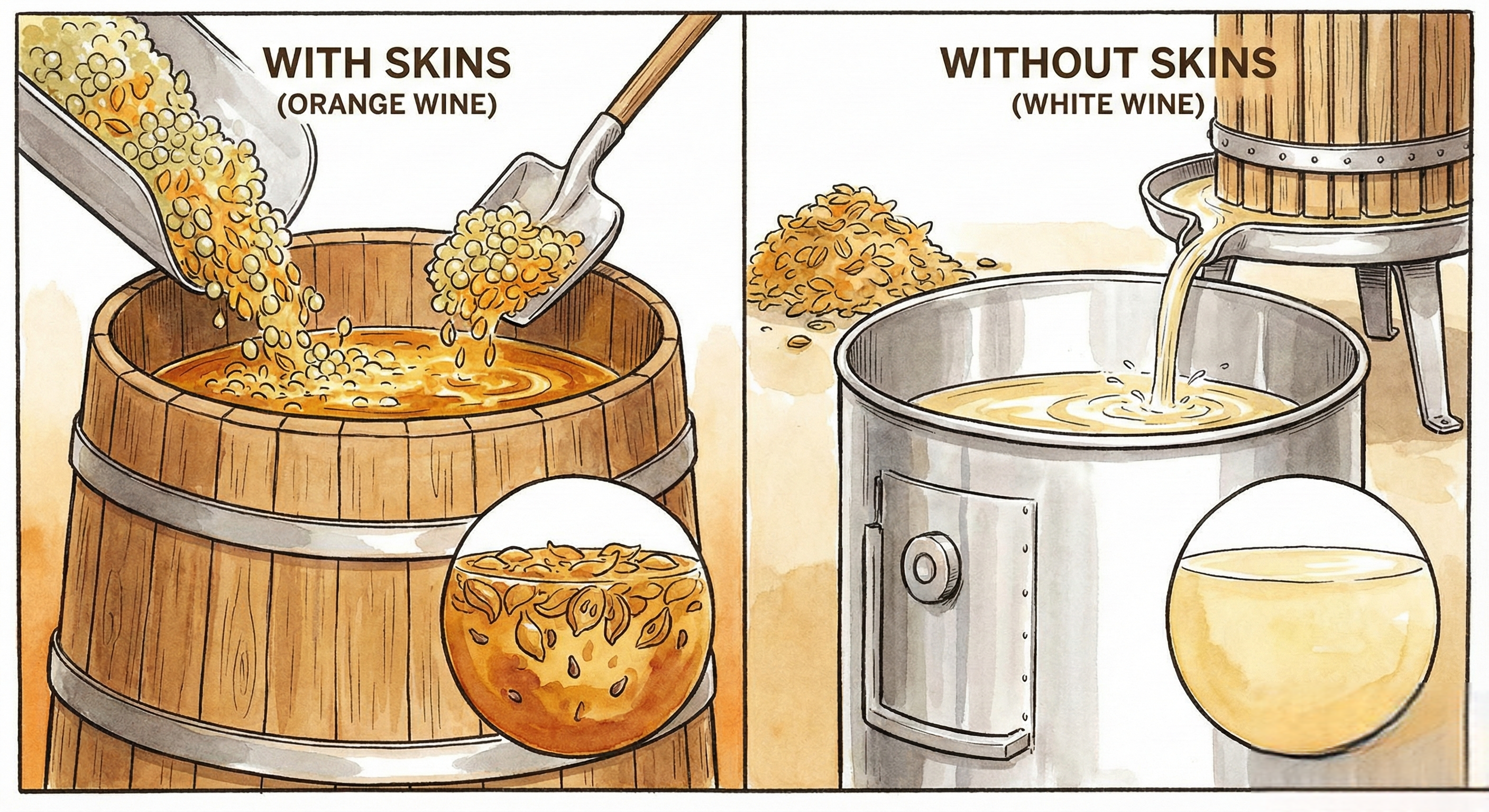
Normally, white grape skins are removed before fermentation. For orange wine, the juice ferments with the skins for days or months. The skins impart:
- Color: Ranging from deep gold to amber to rusty orange.
- Tannin: Yes, a white wine with grip!
- Flavor: Dried apricots, bruised apple, nuts, sourdough, and tea.
Pét-Nat
Short for Pétillant Naturel ("naturally sparkling").
This is the oldest method of making sparkling wine. The wine is bottled before it finishes fermenting. The remaining yeast eats the remaining sugar inside the sealed bottle, creating bubbles.
The result is often cloudy, lower in alcohol, fruity, and can range from slightly fizzy to explosive.
What to Expect
If you're used to clean, consistent supermarket wines, natural wine can be a shock.
- "Funky": Barnyard, hay, or cider notes (often from a yeast called Brettanomyces).
- Sour: Some taste like sour beer or kombucha.
- Alive: Fans love them because they feel vibrant and evolving in the glass.
Get weird.
Ask your local wine shop for a 'beginner orange wine.' It's a fantastic pairing for hard-to-match foods like artichokes or spicy curry.